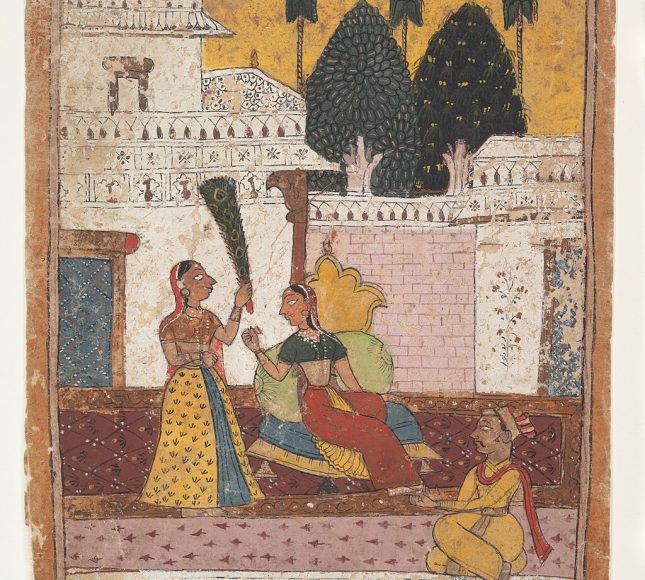
RUTI (RUTTI), a composition by Guru Arjan in Raga Ramkali in the Guru Granth Sahib, comprises eight six-line stanzas, preceded by two slokas, each of two lines. Rutti is the plural of rutt, Skt. rtu (season). The slokas introduce the theme briefly, while the stanzas, called chhants, elaborate upon it. Generally, the hymn portrays the intense urge in man to meet the Supreme Being. The yearning sharpens from season to season.
According to the Indian tradition, the year is divided into six seasons, viz. Vasant (spring), Grisma (summer), Varsha (rainy season), Sharad or Patjhar (autumn), Sisir (the dewy season), and Hemant (winter). Vasant (Punjabi Basant) is from mid-March to mid-May, Grisma or Gnkham from mid-May to mid-July, and so on.
The chhants in Rutti describe a woman’s (seeker’s) longing for the spouse (the Lord), the pangs she bears in separation, and the blissful joy she experiences upon meeting the Lord. The union is achieved through meditation on the Name, and thereby all the seasons, months, and hours become delightful for the devotee. Fortunate are they who are dyed in the steadfast colour of single-minded meditation; fortunate is their coming into the world. In the spring season, all is verdant within and without; the scorched inner self has bloomed through contemplation on the Name.
The ego-ridden person, however, is unaware of the joys of the delectable showers of His grace. It is association with the gurmukhs which leads one to the path of devotion and union with the Supreme Spouse. The jiva (bride), says Guru Arjan, then never suffers the torments of separation: “binvanti Nanak prabh daapai melat; tah na prem bichhoh thi” (GG, 929). The changing seasons then do not affect her.
“The saints are the true helpers of jiva and they are capable of ferrying her across the worldly ocean. They are imbued with the love of God’s Name, and they are the acme of mankind.”
References:
- Sabadarth Sri Guru Granth Sahib. Amritsar, 1964
- Kohli, Surindar Singh, A Critical Study of Adi Granth. Delhi, 1961
Seasons of Yearning in Guru Arjan’s RUTI Hymn is a poetic masterpiece that uses the metaphor of changing seasons to express the soul’s longing for union with the Divine. Composed in Raga Ramkali and included in the Guru Granth Sahib, this hymn comprises eight six-line stanzas (chhants), preceded by two introductory slokas. Below is an exploration of its themes and spiritual significance.
Structure and Context
- Seasonal Framework:
The hymn draws from the Indian tradition of dividing the year into six seasons: Vasant (spring), Grisma (summer), Varsha (rainy season), Sharad (autumn), Sisir (dewy season), and Hemant (winter). Each stanza corresponds to a season, symbolizing the evolving emotions and spiritual states of the seeker. - Introduction through Slokas:
The two slokas set the tone for the hymn, emphasizing the importance of meditating on the Divine Name (Nam) and seeking the company of the saints (gurmukhs). They highlight the transformative power of devotion in overcoming the ego and achieving union with the Supreme.
Themes and Spiritual Message
- Longing for the Divine:
The hymn portrays the soul as a bride (jiva) yearning for her eternal spouse (the Lord). Each season reflects a different aspect of this longing, from the pangs of separation to the bliss of union. The intensity of the yearning grows with each stanza, mirroring the changing seasons. - Union through Devotion:
The hymn emphasizes that union with the Divine is achieved through meditation on the Name and association with the saints. This spiritual connection transforms all seasons, months, and hours into moments of joy and fulfillment. - Detachment from Ego:
The ego-ridden individual is depicted as being unaware of the Divine’s grace. The hymn urges the seeker to shed ego and embrace humility, as this is the path to spiritual realization. - Role of Saints:
The saints are described as the true helpers of the soul, capable of guiding it across the worldly ocean. Their love for the Divine Name makes them the epitome of humanity, and their company is essential for spiritual progress.
Symbolism of Seasons
- Spring (Vasant):
Represents renewal and inner blossoming through contemplation on the Name. The scorched inner self blooms with Divine grace. - Summer (Grisma):
Symbolizes the heat of separation and the soul’s intense longing for the Lord. - Rainy Season (Varsha):
Depicts the soul’s joy as it receives the “showers” of Divine grace, quenching its spiritual thirst. - Autumn (Sharad):
Reflects clarity and detachment, as the soul begins to shed worldly attachments. - Dewy Season (Sisir):
Represents the cooling effect of Divine love, bringing peace and contentment. - Winter (Hemant):
Symbolizes the warmth of union with the Divine, overcoming the coldness of separation.
Concluding Reflections
RUTI Hymn by Guru Arjan is a profound exploration of the soul’s journey toward the Divine, using the metaphor of seasons to depict the evolving emotions of the seeker. It teaches that through devotion, humility, and the guidance of saints, one can transcend the cycles of separation and experience the eternal joy of union with the Supreme.


